Can The World and Fashion Recover?
READ THE FULL ARTICLE IN THE VOLATILE SPRING 22 ISSUE
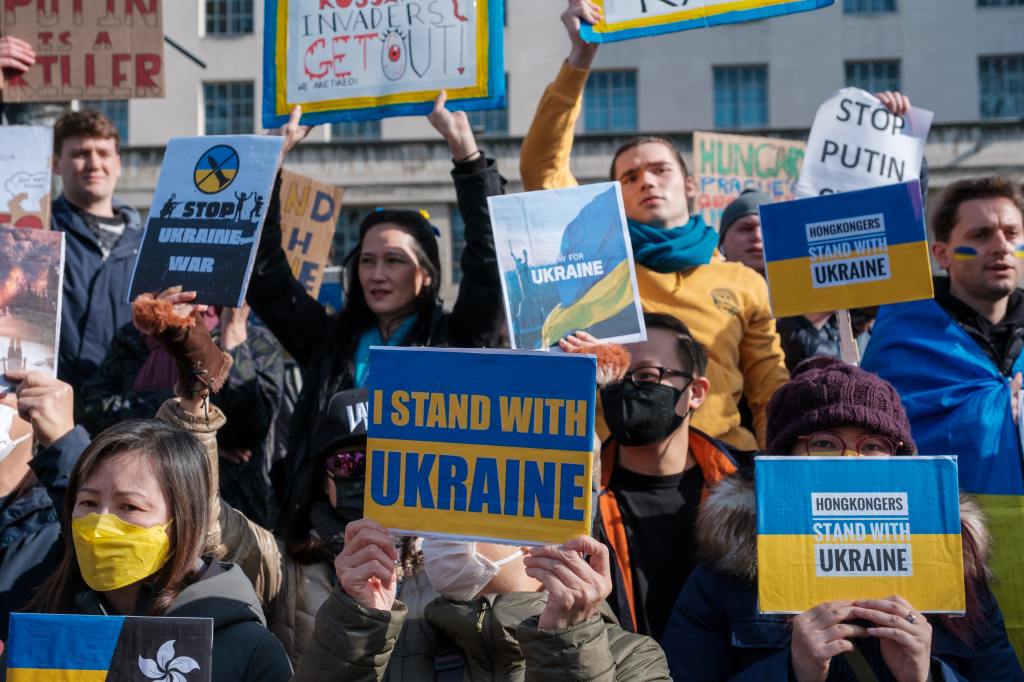
Russia’s invasion of Ukraine triggered worldwide panic, shattered world peace and is causing many Ukrainians to flee their homes to escape the conflict. Whilst the UK and US have enforced diplomatic solutions and military aid to curb Russia’s aggression, the conflict still continues. But where does fashion fit into all this? In light of the political rest and economic repercussions from the conflict, Russia’s economy and the global fashion market has seen consequences from the devastating invasion. Whilst some were considering Moscow to be the next fashion capital, any sartorial progress for the country in the eyes of the world may be put on hold…
Moscow has quickly developed from its first fashion show in 2004 to becoming increasingly more fashion-forward with a new generation of Russian designers showcased worldwide. Many fashion conglomerates are realising the potential of Moscow’s fashion market and are seeking to place stores in the populous city, home to more than 12 million people. However, to say that Moscow will be the next fashion capital of the world alongside Paris, Milan, London and New York may be premature in light of the recent conflict and political unrest that lies between Russia and its neighbouring country, Ukraine.
After the Soviet Union was disbanded in 1991, Ukraine declared itself as an independent country but tensions still exist between them and Russia. The president of Russia, Vladimir Putin is concerned that Ukraine poses a threat to his country and has torn up the 2015 peace deal for the East, launching a devastating attack on Ukraine, home to 44 million people. Putin believes Russia cannot feel “safe, develop and exist” with the threat of modern Ukraine. Putin also fears for Russia’s national security if Ukraine were to side with the European Union and the West’s defensive military alliance NATO, stating that this would place “our historic future as a nation” at risk.
The war in Ukraine is having devastating effects on the communities who live there causing more than 12 million people to flee their homes in Ukraine since the conflict began.
The destruction inflicted on Ukraine has shocked the world and neighbouring countries are doing what they can in support. The US has supplied approximately £3 billion of military aid to Ukraine whilst the UK has confirmed £1.3 billion in extra funding on top of the £1.5 billion of support in the form of humanitarian aid and grants to aid the country.
From previous world wars, we can see the devastating effects this had on each country as well as the strain on finances and resources. The fashion industry was particularly hit hard during World War I and II from heavy rationing, attacks on imports and fabric shortages. In the face of Russia’s attack on Ukraine, NATO are reluctant to engage so far as instigating a catastrophic World War III; however, hard-hitting financial and travel limitations are causing concern for many Russian apparel retailers and luxury brands.
Emerging from a global pandemic has already brought much change to the retail industry. However, the Russian economy remained resilient and the GDP only dropping by 3 per cent in 2020 due to Russia’s anti-crisis measures. Nevertheless, the outbreak of war between Russia and Ukraine is having major repercussions on Russia’s fashion economy. Its fashion market is heavily dependent on imported goods, and according to a report from Flanders Investment & Trade Group in 2019, has had struggles with a shortage of raw materials such as flax, cotton and wool choosing to import cotton from Uzbekistan, Tajikistan and Turkmenistan. Russia similarly does not have strong investment backing for fashion designers, textile producers and weavers resulting in their reliance on imports which are hit hard by the tough sanctions they are facing from the EU and the US.
Many fashion conglomerates are showing their support to Ukraine and choosing to do this through isolating their Russian customers. Both high street retailers such as H&M Group, Mango, Zara, Marks & Spencer, ASOS, Boohoo Group, JD Sports Nike and luxury fashion houses such as Balenciaga, Louis Vuitton, Dior, Hermès, Chanel, Prada, Gucci, Saint Laurent, Cartier and Burberry are responding to the conflict by closing Russian stores and freezing online trade.
‘In the wake of unprecedented military aggression from the Russian Federation and the growing humanitarian crisis in Ukraine, Vogue UA urges all international fashion and luxury conglomerates and companies to cease any collaborations on the aggressor’s market effective immediately’- Vogue Ukraine, reported by Fashion United.
Whilst some fashion brands are choosing to isolate Russian customers, Milan fashion week did continue and served as both a welcome anchor and distraction from the atrocities of the war. Armani presented their show in silence as a sign of respect towards Ukraine, whilst Gucci announced it will be donating $500,000 to UNHCR, the UN Refugee Agency.
It’s not just the retail companies making waves in the industry, reactions to the war from country leaders has had a knock-on effect on the global fashion market. The luxury fashion market, in particular, has seen a change from travel bans to Russian citizens; sales of Chanel boutiques in London have fallen by 40 per cent when approximately 35 per cent of their shoppers constituted Russians, according to Fibre 2 Fashion. Similar effects have also been felt by retail brands in both Paris and Milan. This raises concerns as to whether relations between the West and Russia will recover and if European fashion capitals will lose business in the long run.
Tensions are high and countries worldwide are showing their support to Ukraine during this troubling time. We are all hoping for the conflict to come to an end but with a consensus from global leaders to isolate Russia, its economy and long-term fashion scene will be hit hard. The conflict has caused devastation to Ukraine and shattered relations with the western world, which may freeze Russia’s fashion expansion and Moscow’s rise to fashion royalty for the foreseeable future.
Cover Image: Unsplash / Ehimetalor Akhere Unuabona
 May Garland