READ THE FULL ARTICLE IN RETAIL JEWELLER’S DECEMBER ISSUE
Finematter resident jewellery expert and gemmologist Lezlie Bailey is tackling the barriers facing many Black jewellers with her new culturally sensitive jewellery competition Chroic. May Garland reports
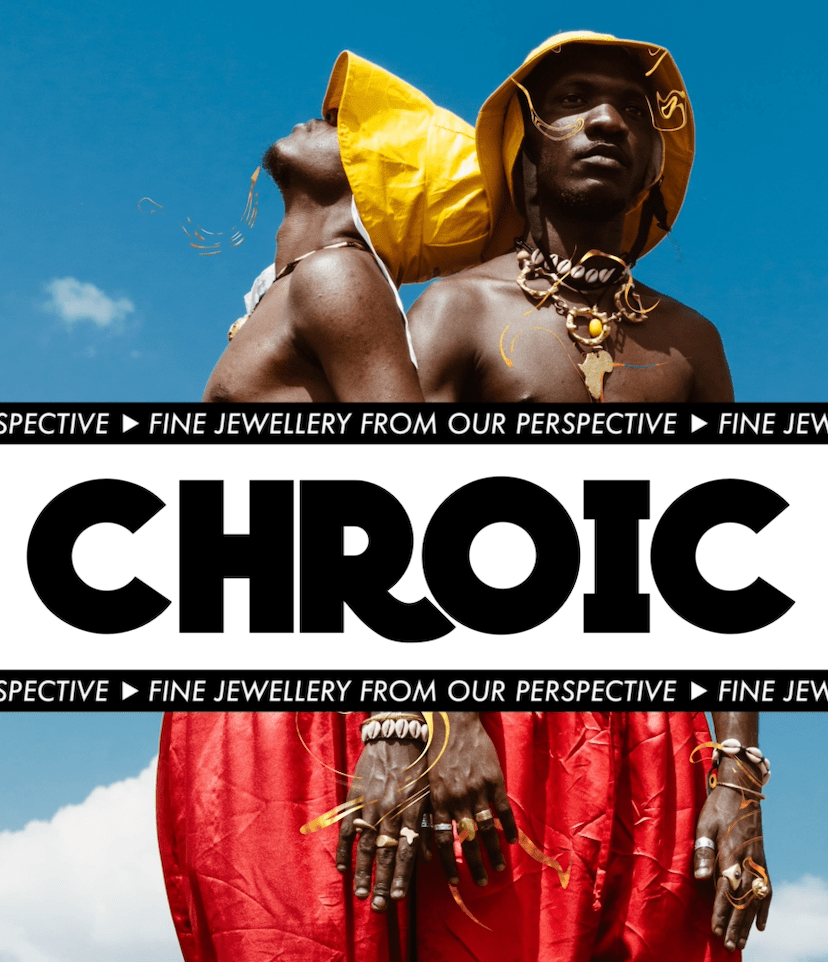
Launched in September this year, Chroic is the first event of its kind, aiming to empower Black jewellers socially, creatively and economically through networking and funding opportunities. The competition is open to fine and demi-fine jewellers who identify as African, Caribbean or with any other Black background.
Chroic founder Lezlie Bailey’s interest in the industry was sparked during work experience for family-owned jewellers, where she shadowed a dermatologist for the day. “I remember on my first day they put a diamond in my hand for the first time and I was in awe,” said Bailey. Despite her early fascination with jewellery, Bailey didn’t want to pursue jewellery making. It was whilst studying for her Bachelor of Science Geology course at University College London (UCL), followed by a Diploma in Practical Gemmology from the Gemmological Association of Great Britain (Gem-A), where Bailey’s interest in rocks and minerals took root.
After completing her courses, Bailey secured work as a resident jewellery expert at Finematter, a platform for small, independent jewellers who are conscious of the impact the jewellery industry has on the global supply chain and environment. “It’s a place for jewellers to host their collections but they needed someone to work on educational articles, make sure the copy was correct and make sure that what they’re putting out is legal, so that’s what I do,” explains Bailey. Keeping her schedule busy, Bailey works as a jewellery authenticator, which she describes as interesting yet demanding work. “Gemmology is great but very intense and requires a lot of concentration. Some days I come home and my eyes are blurry from focusing all day, but I do enjoy what I do,” adds Bailey.
Whilst Bailey feels grateful to pursue her passion for gemmology, she has had mixed experiences in the jewellery industry due to racial injustice. “If you asked me last year how I felt about the industry I would have actively discouraged Black people from joining because of the weird discrimination you would receive. Superficially, there’s a lot of talk about progression but from what I see there’s not a lot of action on the ground,” reveals Bailey. “Nevertheless, I thought, if I have a kid, I want to share my passion for jewellery with them. So, I could either suffer in silence or try to help other people. I want Choric to be the place to help people in the jewellery industry from a relatable background and support people in the best way I can.”
In response to her personal experiences of discrimination in the jewellery industry and the Black Lives Matter movement of 2020, Bailey created ‘The List’ encouraging brands to adopt a more diverse business model. Starting with 25 names, The List now hosts over 300 Black jewellers, designers, educators and more. Bailey’s work on this project helped her to identify the struggles and barriers facing Black creatives in the industry to this day. “Through outreach, activism and research undertaken over the last two years, I identified three main barriers for Black jewellers: access to funding, access to networks, and recognition and exposure. There really isn’t much Black representation in the industry. One of my pet peeves is seeing jewellery brands’ limited use of racially diverse models. There’s also the communication issue, where a lot of Black jewellers don’t know other Black jewellers. So, I thought what’s the best way to try and help the community as best as possible?” From here, Chroic was born, addressing these limitations to make the jewellery trade a more diverse industry and celebrate Black artistry.
As Chroic’s project organiser, marketer, head of media, content creator and more, Bailey admits this project felt overwhelming at first, the most challenging step being deciding on a name. Despite the competition’s aim to promote diversity and inclusivity in the jewellery industry, Bailey didn’t want the name to include the word ‘black’, rather she wants to keep the focus of the competition on the jewellery and talents of the entrants, regardless of skin colour. “In geology, there is a term called pleochroic or dichroic, this is when you have a gemstone that looks like a different colour from different angles.” Like the pleochroic gemstones, the Black jewellers are more than just skin colour but skilled and multi-faceted artisans.”
Once the name was decided, Bailey had to secure funding for the competition. The Goldsmiths’ Centre was a vital part of making the competition possible. After pitching the concept and completing a six-month programme, Bailey succeeded in securing £50,000 of funding through the Goldsmiths’ Company Charity’s Global Majority programme. The funding will be used to award the winning entries with generous cash prizes of £1,500 for Best in Show, as well as two runners-up prizes of £700. Alongside the chance to win cash prizes, all entrants will receive professional photography for use in their portfolios, social media or future promotional materials.
The competition brief is ‘Origin, Lineage, Legacy’, and entries will be judged by a panel of leading Afro-Caribbean and Black artisans. “I didn’t want the brief to be too specific. I want jewellers to have the opportunity to bring their voice to whatever they make and put their personality into their work without too many constraints. But I also want jewellers to consider what they want to leave behind, what their legacy is, where their passion for jewellery comes from.” Bailey and the panel of judges will be looking for original, inspired works crafted with skill, intention and meaning.
“I want the event to showcase different styles of jewellery making. Whether its teeth grills or engagement rings, we want to represent all areas of the industry,” says Bailey. “Everyone will be judged fairly based on level of skill and design concepts. The evening will also be a great opportunity to network and appreciate other jewellers’ work.”
The Chroic competition aims to help make the jewellery industry more inclusive for creatives from different backgrounds; however, Bailey highlights ways that brands and buyers can do more to diversify the industry. “Brands hiring models with different skin tones would be a start. All it takes is one person to think, ‘that person has the same skin tone as me, I know that will look good on me, so I’ll buy it’. I’d also encourage organisations to actively reach out to Black jewellers and buy Black jewellery. Support your local Black businesses. I’m hoping that Choric will be a great opportunity for Black jewellers to network and look to other Black people for their supply chains et cetera, and then we can create some change in the industry.”
Bailey’s optimism for how real change can be achieved in the jewellery industry for present and future generations radiated through our interview. “To Black jewellers, don’t be scared. I’ve had a few messages from people saying they’ve never done a competition before, but I encourage everyone to give it a go. The judges are also friendly, fair and give really good feedback. As well as the cash prize, Chroic is also a great opportunity to get competition experience for the next time. I want to make Chroic a recurring event.”
 May Garland